
Guided reading fosters observation of students tackling texts at their instructional level, offering opportunities for targeted support and skill development.
Effective objectives address decoding, fluency, and comprehension, ensuring a well-rounded approach to literacy instruction within small group settings.
Ultimately, guided reading aims to empower students with independent strategies for navigating and understanding increasingly complex texts.
What is Guided Reading?
Guided reading is a powerful instructional approach where teachers work with small, flexible groups of students who share similar reading needs. It’s not simply round-robin reading; instead, it’s a carefully orchestrated process designed to support students as they develop effective reading strategies.
The core of guided reading lies in the teacher’s observation and responsive teaching. Teachers select texts at students’ instructional levels – challenging enough to require support, but not so difficult as to cause frustration. During the reading process, teachers provide prompts and guidance, encouraging students to problem-solve and apply strategies like decoding, fluency practice, and comprehension checks.
Crucially, the goal isn’t to tell students what to do, but to help them discover how to navigate texts independently. It’s a collaborative experience, building rapport and fostering a safe environment for risk-taking and learning. This approach allows for differentiated instruction, catering to the unique needs of each reader.
The Importance of Clear Objectives
Clearly defined objectives are fundamental to effective guided reading lessons. Without them, instruction can become unfocused and lack purpose, hindering student progress. Objectives provide a roadmap for both the teacher and the students, outlining what skills will be targeted and what students should achieve during the lesson.
Well-crafted objectives ensure that instruction is intentional and aligned with individual student needs. They allow teachers to select appropriate texts and design targeted prompts and activities. Furthermore, clear objectives facilitate assessment, enabling teachers to accurately monitor student progress and adjust instruction accordingly.
Measurable objectives, using action verbs, are especially valuable. They allow teachers to observe specific behaviors demonstrating student understanding and skill development, ensuring accountability and maximizing learning outcomes.
Core Reading Skills & Objectives
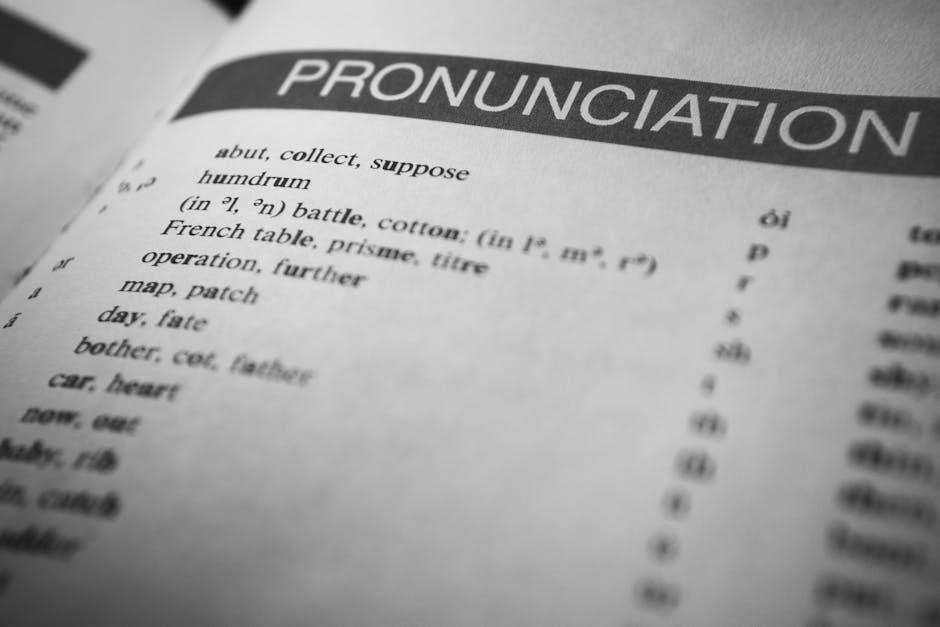
Reading skills—decoding, fluency, and comprehension—form the foundation of guided reading. Objectives should individually address each area for comprehensive student growth.
Decoding Objectives
Decoding objectives within guided reading center on students’ ability to accurately and efficiently translate print into speech. These objectives often focus on phonemic awareness and phonics skills, crucial for early reading success.
A primary objective might be for students to blend sounds to read CVC (consonant-vowel-consonant) words with increasing accuracy. Another could involve recognizing common digraphs (like ‘sh’ or ‘ch’) and applying that knowledge during reading.
Teachers can set objectives around segmenting words into individual sounds, or manipulating phonemes within words. Successful decoding allows students to move beyond laborious word-by-word reading, freeing cognitive resources for comprehension. Ultimately, decoding objectives aim to build a strong foundation for fluent reading.
Phonemic Awareness & Phonics
Phonemic awareness objectives target the sounds within words – manipulating, identifying, and segmenting them. A guided reading objective could be for students to orally blend /c/ /a/ /t/ to say “cat” with 80% accuracy.
Phonics objectives focus on the relationship between letters and sounds. Students might practice decoding words with specific vowel patterns (e.g., CVCe words like “cake”). Objectives could involve identifying the vowel sound in a given word or applying a specific phonics rule to decode unfamiliar words.
Effective lessons integrate both; students use phonics knowledge to decode, while phonemic awareness strengthens sound manipulation skills. These skills are foundational for accurate and fluent reading, enabling students to tackle increasingly complex texts.
Fluency Objectives
Fluency objectives center on reading with accuracy, rate, and prosody – reading smoothly, at an appropriate pace, and with expression. A key objective is improving reading rate, measured in words correct per minute (WCPM). Students might aim to increase their WCPM by after repeated readings.
Accuracy is also crucial; objectives could focus on reducing errors during oral reading. Teachers can set goals for a specific percentage of words read correctly. Furthermore, developing prosody – reading with appropriate phrasing and intonation – enhances comprehension.
Guided reading provides a supportive context for practicing and refining these fluency components, ultimately leading to more confident and effective readers.
Reading Rate & Accuracy
Reading rate and accuracy are intertwined components of fluency, directly impacting comprehension. Objectives should target measurable improvements in both areas. For rate, students might strive to increase words correct per minute (WCPM) through timed repeated readings of a passage.
Accuracy objectives focus on minimizing errors during oral reading. A goal could be to achieve 95% accuracy on a given text, demonstrating proficient decoding skills. Teachers can track errors – misreads, omissions, substitutions – to monitor progress.
Improving both rate and accuracy builds reading confidence and frees cognitive resources for deeper understanding of the text.
Comprehension Objectives
Comprehension objectives are central to guided reading, moving beyond simply decoding words to understanding meaning. These objectives span various levels, from recalling factual details (literal comprehension) to drawing conclusions based on textual evidence (inferential comprehension).
More advanced objectives involve evaluative comprehension – forming opinions, analyzing author’s purpose, and critically assessing the text. Students might be asked to justify their interpretations with specific examples from the story.
Effective objectives are clearly defined and observable, such as “Students will be able to retell the main events in sequence” or “Students will identify the author’s message.”
Literal Comprehension
Literal comprehension objectives focus on understanding the explicitly stated information within the text. These are foundational skills, requiring students to locate facts, identify key details, and recall information directly presented by the author.
Objectives at this level might include tasks like “Students will answer ‘who,’ ‘what,’ ‘where,’ and ‘when’ questions accurately” or “Students will identify the main characters and setting.”
Successful literal comprehension demonstrates a basic understanding of the text’s surface level meaning, forming the basis for more complex interpretive skills. It’s about what the text tells you.
Inferential Comprehension
Inferential comprehension objectives move beyond the explicitly stated, challenging students to “read between the lines” and draw conclusions based on textual clues and prior knowledge. This requires active engagement and critical thinking.
Objectives might include “Students will infer a character’s feelings based on their actions” or “Students will explain why an event occurred, citing evidence from the text.”

Developing this skill allows students to construct meaning not directly presented, fostering a deeper understanding of the author’s intent and the nuances within the narrative. It’s about what the text implies.
Evaluative Comprehension
Evaluative comprehension objectives represent the highest level of understanding, prompting students to form judgments about the text’s quality, purpose, and relevance. This goes beyond simply understanding what is read to analyzing how and why it’s written.
Objectives could focus on students “evaluating a character’s motivations” or “determining the author’s purpose in writing the text.” Encouraging students to justify their opinions with textual evidence is crucial.
This skill fosters critical thinking and allows students to become discerning readers, capable of forming informed opinions and engaging in thoughtful discussions about literature.

Types of Guided Reading Objectives
Objectives fall into strategic and process categories, guiding students to utilize prior knowledge, make predictions, and employ self-monitoring techniques effectively.

Strategic Objectives
Strategic objectives in guided reading center around the thoughtful processes readers employ before and during reading to enhance comprehension. These objectives encourage students to become active participants in constructing meaning, rather than passive recipients of information.
A key strategic objective involves using prior knowledge to connect with the text, activating relevant schemas and building a foundation for understanding. Similarly, making predictions – about what might happen next, or the text’s overall theme – fosters engagement and encourages students to monitor their understanding as they read.
Effective strategic objectives empower students to approach texts with intention, utilizing their existing knowledge and anticipating content, ultimately leading to deeper comprehension and a more rewarding reading experience.
Using Prior Knowledge
Activating prior knowledge is a cornerstone of effective guided reading, bridging the gap between what students already know and the new information presented in a text. This objective encourages students to consciously connect their experiences, understandings, and previous readings to the current material.
Before reading, prompting students to brainstorm what they already know about a topic, or to share related experiences, builds a crucial foundation for comprehension. This process helps them create meaningful connections, anticipate content, and formulate questions.
Successfully utilizing prior knowledge transforms reading from a passive activity into an active construction of meaning, enhancing engagement and fostering deeper understanding of the text’s concepts and themes.
Making Predictions
Prediction is a vital strategic objective within guided reading, prompting students to actively engage with the text before and during reading. This skill encourages them to formulate hypotheses about what might happen next, based on clues within the text – such as titles, illustrations, or initial paragraphs.
Effective prediction isn’t simply guessing; it’s a reasoned anticipation grounded in textual evidence and prior knowledge. Guiding students to articulate why they are making a particular prediction strengthens their analytical skills.
As they read, revisiting and revising predictions fosters critical thinking and a deeper understanding of plot development, character motivations, and the author’s craft.
Process Objectives
Process objectives in guided reading concentrate on the specific strategies readers employ while interacting with a text. These aren’t focused on the content itself, but rather how students approach the act of reading; A key aim is to help students become more aware of their own thinking as they read.
This involves explicitly teaching and modeling strategies like self-monitoring and cross-checking. Students learn to actively question their understanding, identify areas of confusion, and employ techniques to resolve those difficulties.
Ultimately, process objectives empower students to become independent, problem-solving readers capable of navigating challenging texts with confidence and resilience.
Self-Monitoring Strategies
Self-monitoring strategies are crucial for developing independent readers. These techniques involve students actively checking their own comprehension as they read, rather than passively receiving information. This includes prompting students to ask themselves questions like, “Does this make sense?” or “What have I learned so far?”
Teachers model think-alouds, demonstrating how to identify confusing parts, reread for clarity, and make connections to prior knowledge. Encouraging students to pause periodically to summarize or predict also fosters self-monitoring.
By internalizing these habits, students become more aware of their understanding and can proactively address comprehension breakdowns.
Cross-Checking Strategies
Cross-checking strategies empower students to confirm or adjust their reading when encountering difficulties. This involves utilizing multiple sources of information – meaning, structure, and visual cues – to verify accuracy. Students learn not to rely solely on one cueing system.
For example, if a word doesn’t sound right, they’re prompted to consider if it makes sense in the context of the sentence or if the initial sound matches the visual representation. Teachers model this process, verbalizing their own cross-checking thoughts.
Effective implementation builds confidence and promotes flexible reading habits, leading to greater comprehension and independence.

Developing Measurable Objectives
Objectives should utilize action verbs and focus on observable behaviors, allowing teachers to assess student progress effectively during guided reading sessions.
Using Action Verbs
Crafting measurable guided reading objectives hinges on employing strong action verbs. Instead of vague terms like “understand” or “know,” opt for verbs that demonstrate observable actions. For instance, students might “identify” the main idea, “explain” a character’s motivation, or “summarize” a key event.
These verbs provide clarity regarding what students should do to showcase their learning; Consider verbs from Bloom’s Taxonomy – analyze, evaluate, create – to encourage higher-order thinking.
Action verbs transform abstract goals into concrete, assessable targets. They guide both instruction and evaluation, ensuring that objectives are truly measurable and focused on demonstrable skills. This approach strengthens the effectiveness of guided reading lessons.
Observable Behaviors
Measurable objectives require defining specific, observable behaviors that demonstrate student success. What will students actually do to show they’ve met the objective? For example, if the objective is to improve decoding, an observable behavior might be “correctly reads 9 out of 10 multi-syllabic words.”
Avoid internal states like “feels confident.” Instead, focus on actions you can witness and record – pointing to specific text evidence, retelling a story in sequence, or self-correcting errors during reading.
Clearly defined observable behaviors provide a concrete benchmark for assessment, ensuring objective evaluation of student progress during guided reading sessions and informing future instructional decisions.

Implementing Objectives in a Lesson
Objectives guide instructional choices before, during, and after reading; they shape prompts, focus observation, and determine appropriate follow-up activities.
Before Reading Objectives

Before reading, objectives often center on activating prior knowledge and setting a purpose for reading. This might involve students discussing what they already know about a topic, or making predictions about what will happen in the text.
A key objective is to help students connect the text to their own experiences, fostering engagement and comprehension. Teachers can explicitly ask students to recall related events or concepts, or to brainstorm vocabulary words they anticipate encountering.
Another valuable objective is to preview the text features – such as headings, illustrations, and captions – to build anticipation and guide their initial reading. These pre-reading activities lay the foundation for successful decoding, fluency, and comprehension during the reading process.
During Reading Objectives
During reading, objectives shift towards monitoring comprehension and applying reading strategies. A primary goal is for students to self-monitor their understanding, noticing when they encounter difficulties. This involves encouraging them to use cross-checking strategies, verifying their predictions and adjusting their reading as needed.
Objectives also focus on decoding unfamiliar words, prompting students to utilize phonics skills and context clues. Teachers can observe students’ application of these strategies, providing support when necessary.
Furthermore, objectives may include prompting students to pause and summarize sections of the text, ensuring they are actively constructing meaning. This active engagement fosters deeper comprehension and strengthens reading fluency.
After Reading Objectives
After reading, objectives center on solidifying comprehension and extending understanding beyond the text. Students should be able to retell the story, identifying key events and characters, demonstrating literal comprehension. Objectives also target inferential comprehension, prompting students to draw conclusions and make connections based on textual evidence.
Evaluative comprehension objectives encourage critical thinking, asking students to form opinions and justify their reasoning. Discussion-based activities are ideal for achieving these goals, fostering collaborative learning.
Finally, objectives may include extending the learning through writing activities, such as summarizing, responding to prompts, or creating alternative endings, reinforcing skills and deepening engagement.

Assessing Objective Achievement
Assessment utilizes running records to analyze reading behaviors and observation checklists to track progress toward specific, measurable objectives during guided reading.
Running Records
Running records are a foundational assessment tool in guided reading, providing a detailed, qualitative analysis of a student’s reading performance. They involve marking a text to document every reading behavior – correct word recognition, errors, self-corrections, and pauses.
This detailed record allows teachers to identify patterns in a student’s reading, pinpoint specific areas of difficulty (like decoding challenges or fluency issues), and evaluate progress toward established objectives. Analyzing error rates, self-correction ratios, and the types of errors made offers valuable insights into a student’s processing strategies.
Running records aren’t simply about counting errors; they’re about understanding how a student is attempting to read and informing instructional decisions to support their growth. They directly link to objective achievement by demonstrating whether a student can apply taught strategies.
Observation Checklists
Observation checklists offer a systematic way to monitor student behaviors during guided reading, aligning directly with pre-determined lesson objectives. Unlike running records, they focus on the presence or absence of specific skills and strategies, providing a quick snapshot of performance.
A well-designed checklist includes observable behaviors related to decoding, fluency, and comprehension – for example, “Uses initial consonant sounds to decode unknown words” or “Makes predictions before reading.” Teachers can mark whether a student consistently demonstrates, occasionally demonstrates, or doesn’t demonstrate each skill.
This method allows for efficient tracking of multiple students simultaneously and provides concrete evidence of objective attainment. Checklists complement running records, offering a broader view of a student’s reading process and informing differentiated instruction.